

 ไทย
 中文 (中国)
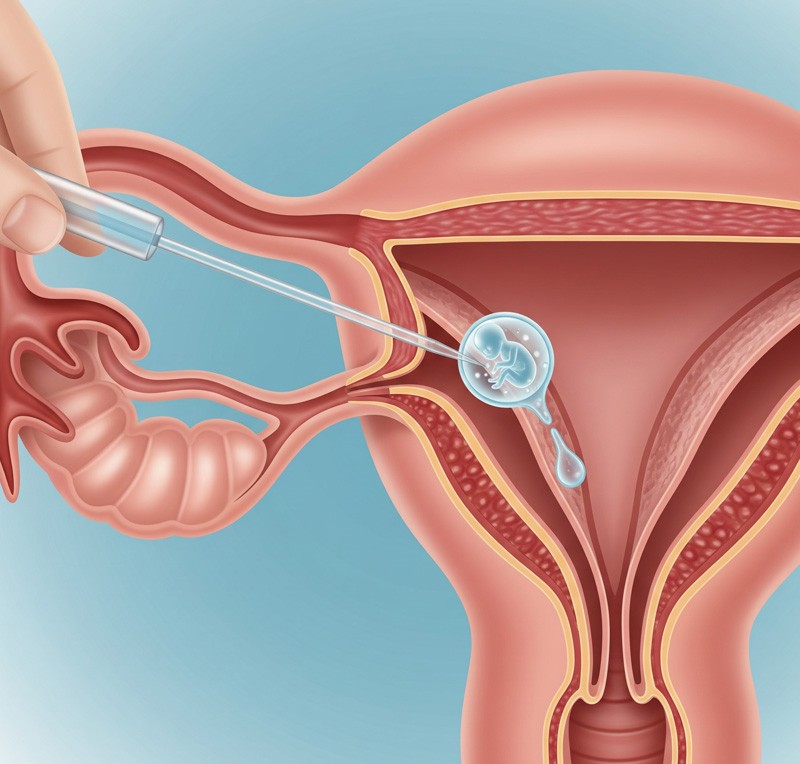
FET (Frozen Embryo Transfer)
Frozen Embryo Transfer (FET) is the process of transferring embryos that have been cryopreserved using the vitrification technique. The embryos are thawed and transferred into the uterus during an appropriate cycle. The endometrium is prepared to be receptive for implantation, with a flexible plan tailored to the patient’s health and clinical needs.
Main Steps of FET
- ✦Endometrial Preparation: Hormonal support may be administered, or natural regulation may be allowed, to ensure the endometrium develops to the optimal thickness and condition for implantation.
- ✦Embryo Thawing: Frozen embryos are thawed using specialized techniques to maintain their quality and maximize implantation potential.
- ✦Embryo Transfer: The embryo is transferred into the uterus using a fine catheter inserted through the cervix. The procedure is painless and does not require anesthesia.
Follow-up
- ✦After the transfer, a pregnancy test (β-hCG) is scheduled within 7–10 days to confirm implantation.
Advantages of FET
- ✦Provides flexibility in planning the most suitable and convenient time for embryo transfer.
- ✦Reduces the risks associated with repeated ovarian stimulation.
- ✦Offers comparable or higher success rates than fresh embryo transfer, as the body has time to recover and the endometrium is in optimal condition.


