

 ไทย
 中文 (中国)
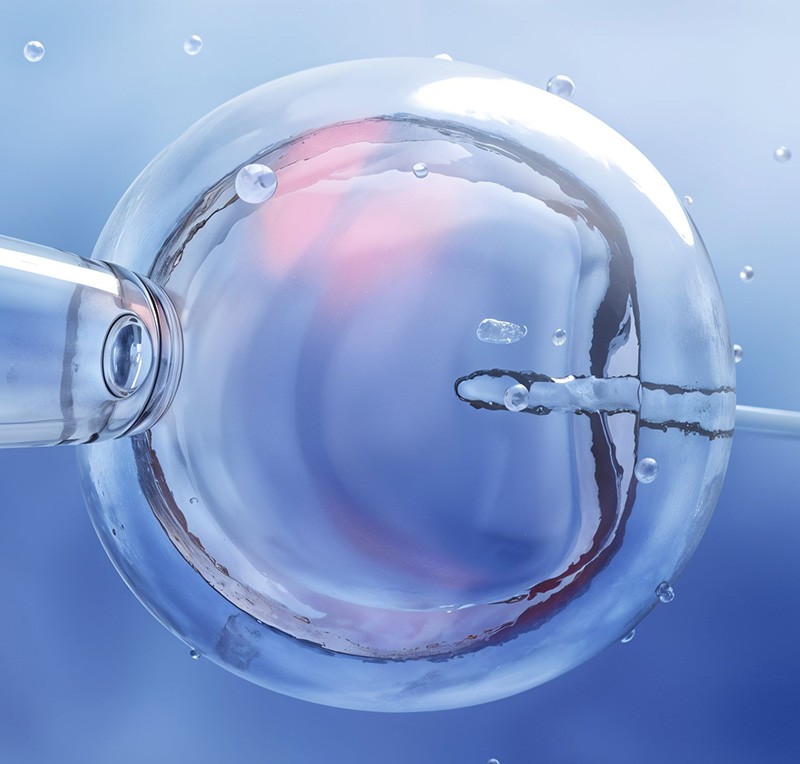
ICSI (Intracytoplasmic Sperm Injection)
ICSI is a specialized form of IVF in which a skilled embryologist selects a single healthy sperm and injects it directly into a mature egg in the laboratory. After fertilization, the embryos are cultured for several days under controlled conditions to ensure optimal development. Once ready, the healthiest embryo(s) are transferred into the uterus to achieve pregnancy.
Advantages of ICSI:
- ✦
High-Tech Solution for Male Infertility:
ICSI is especially effective for men with low sperm count, poor motility, or abnormal morphology. It can also be used when sperm must be retrieved directly from the testicles using PESA or TESA. - ✦
Precision and Control:
The procedure allows one-to-one fertilization under a microscope, giving embryologists full control over embryo quality and increasing the chances of success for couples with prior IVF failures or unexplained infertility. - ✦
Maximizes Fertilization Potential:
By bypassing natural fertilization barriers, ICSI provides an effective option for couples who might not achieve fertilization through conventional IVF.
Who Is ICSI Suitable For?
- ✦Couples where the male partner has severe sperm abnormalities or requires surgical sperm retrieval.
- ✦Couples with unexplained infertility who have struggled to conceive for over three years.
- ✦Couples where the female partner has damaged or blocked fallopian tubes.
FAQ
What is the difference between ICSI and IVF?∨
ICSI and IVF are both assisted reproductive technologies (ART) used to treat infertility. The main difference lies in how the sperm fertilizes the egg.
ICSI: For ICSI (Intracytoplasmic Sperm Injection), a single, high-quality sperm is selected under a microscope and directly injected into the egg using a tiny needle. After fertilization, the resulting embryo is cultured in a special lab medium. Once the embryo reaches the appropriate stage of development, it’s transferred to the uterus to initiate a pregnancy.
IVF: With IVF (In-Vitro Fertilization), a mature egg is placed in a dish with thousands of sperm, allowing the strongest sperm to naturally fertilize the egg on its own. The best quality eggs and sperm are chosen for this process. Once an embryo forms, it’s transferred to the uterus to establish a pregnancy.
Who is ICSI suitable for?∨
ICSI is suitable for couples who have fertility problems due to:
- Couples who are unable to conceive within one year, despite having regular intercourse and not using contraception.
- Older female spouses (over 35 years old).
- The female spouse has a history of multiple miscarriages of unknown cause.
- Couples in which the man has abnormal sperm quality, very little sperm, or weak sperm.
- Couples who have previously undergone infertility treatment with other reproductive technologies without success, such as intercourse counting, IVF, GIFT, and IUI.
- Spouses who have a family history of genetic diseases such as thalassemia or have given birth to a baby with a genetic disorder.
- Couples who have undergone sterilization can use ICSI to conceive again without having to undergo sterilization reversal surgery.
- The female has undergone sterilization by tying, cutting, or blocking the fallopian tubes.
- Men who have undergone a vasectomy by ligating the vas deferens.
How to prepare for ICSI∨
Preparation of the woman: Take proper care of your health, focus on eating foods high in protein, vegetables, and fruits. Reduce foods high in fat, sugar, processed, and fermented foods, as well as alcoholic beverages. Exercise regularly for 30–45 minutes, 3–4 times a week. Get enough sleep (go to bed before 10 p.m., 7–8 hours per day) and take vitamins/supplements strictly as recommended by your doctor.
Preparation for the man: Eat a healthy diet focusing on protein and reducing fat, sweets, sugar, alcohol, and processed foods. Get enough sleep, exercise regularly, and refrain from drinking alcohol, smoking cigarettes, and e-cigarettes.
ICSI procedure∨
5 important steps before ICSI: 1. Physical examination (blood tests, hormone levels, ultrasound) 2. Ovulation stimulation 3. Positive ovulation follow-up 4. Egg retrieval (under general anesthesia) 5. Sperm collection/retrieval (abstain from ejaculation 2–3 days prior).
Steps during ICSI: Fertilization by injecting a single selected sperm into each egg, followed by embryo culture in a special nutrient medium for 3–5 days prior to grading.
Embryo Transfer: Transferring embryos back into the uterine cavity, which includes Fresh Embryo Transfer (ET) and Frozen Embryo Transfer (FET). Post-transfer steps include administering progesterone to support pregnancy.
When will I know if I’m pregnant after ICSI?∨
About 7–14 days after the embryo transfer, your doctor will schedule a pregnancy test including a blood test to measure Beta-HCG levels.
How long does ICSI take?∨
The average ICSI cycle takes approximately 3 months from initial examination to embryo transfer. The exact timeline depends on egg retrieval, fertilization, embryo culture, age, and individual hormone levels.
Is ICSI painful?∨
Mild discomfort may occur during subcutaneous injections for egg stimulation. During vaginal egg retrieval, anesthesia is used so you won’t feel pain. You may experience minor cramping in the lower abdomen or pelvis after the procedure, which usually resolves within 1–2 days.


